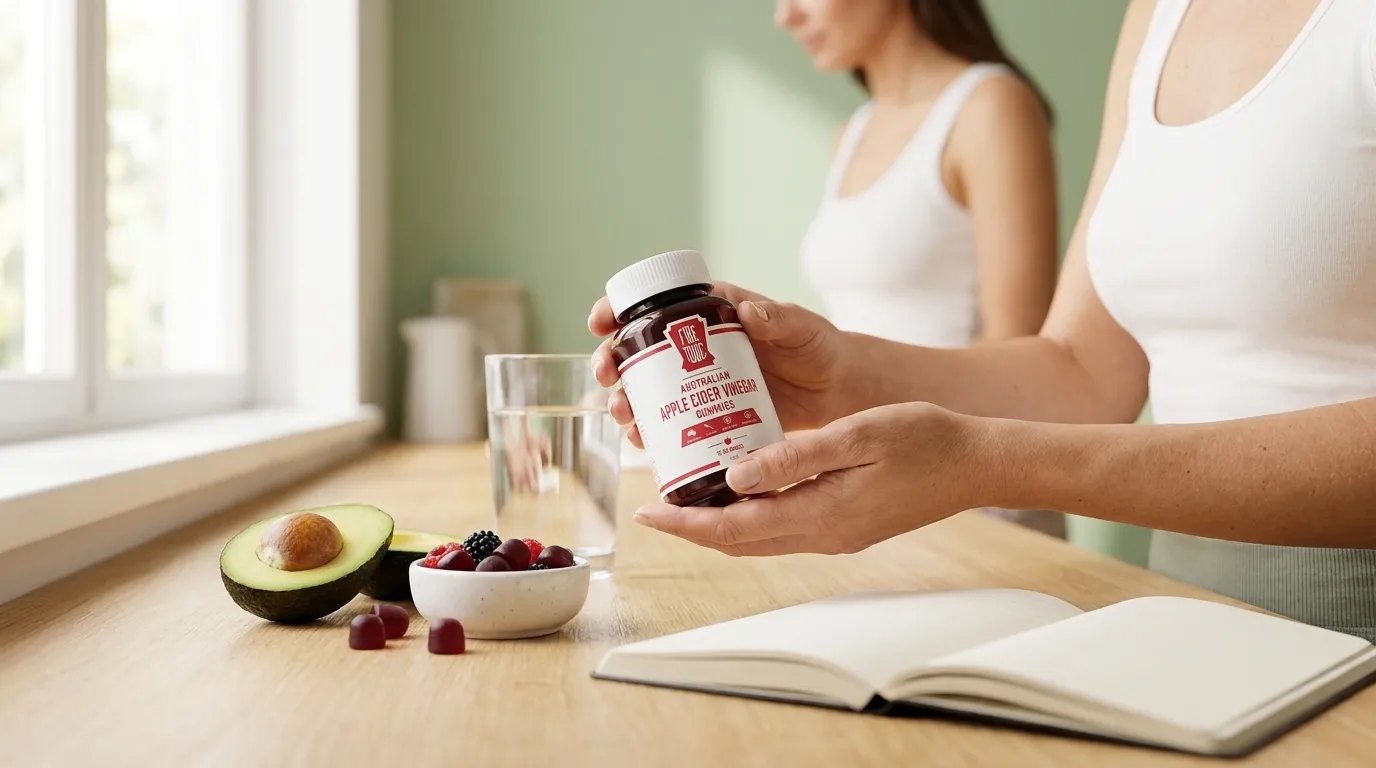
Appetite Control Gummies in the GLP-1 Era
The wellness industry seems to be making a pretty expensive mistake in the GLP-1 era: too many brands still talk as if gummies can do what prescription drugs do. They can’t. But that does not make appetite control gummies useless, not even close. A more practical view is also the more helpful one: these products usually work best as support tools for building habits, handling stress-related eating, and making daily routines easier to stick with, rather than as “natural Ozempic” shortcuts.
That point matters now because GLP-1 drugs have changed the weight-loss conversation in a very real way. You see them more now, more people are using them, and they cost more than they used to. Even so, plenty of health-conscious adults still want something milder, something they can actually stick with, and something that fits better with keto, adaptogens, and everyday wellness habits, which is fair. That’s where appetite control gummies, and even some so-called fat burning gummies, may still have a place.
The better case is for a more sensible middle ground. The aim is to cut the hype, improve labeling, set more honest expectations, and be clearer about the limits. It looks at why demand is rising, why convenience still tends to win, where the evidence falls short, and how consumers can size up gummies without getting swept up by marketing claims that make them sound like drugs.
GLP-1 changed the market, but it did not erase the need for simpler tools
The GLP-1 boom isn’t just media noise. It reflects a real shift in how people talk about appetite, body weight, and metabolic health, and it’s not something you can brush off. KFF polling from late 2025 found that 12% of U.S. adults were currently using a GLP-1, and 18% said they had used one at some point. That figure for current use went from 6% in May 2024 to 12% in November 2025. KFF also reported that U.S. prescriptions went from about 1 million in 2019 to more than 8 million in 2024, while gross spending climbed from around $1 billion to nearly $9 billion.
| GLP-1 Metric | Value | Period |
|---|---|---|
| Current U.S. adult use | 12% | Late 2025 |
| Ever used | 18% | Late 2025 |
| Use mainly for weight loss | 5% | Late 2025 |
| Prescriptions | 1M to 8M+ | 2019 to 2024 |
| Gross spending | $1B to nearly $9B | 2019 to 2024 |
A few takeaways stand out from those numbers. For one, prescription appetite management now feels much more like part of everyday life. Just as important, when a drug category grows this fast, more people often start looking for support that feels closer to home and earlier in the process. Some want help before they ever talk with a doctor. Others look for support after they stop taking a medication. And some just can’t afford the prescription route, which is likely more common than many people say out loud. So demand usually starts moving beyond clinics and pharmacies toward lower-cost, simpler options people can actually get.
Affordability is the clearest opening here. In that same KFF poll, 56% of GLP-1 users said the drugs were difficult to afford, and 14% said they stopped because of cost. That doesn’t prove gummies work. It does, however, help explain why interest in cheaper alternatives makes sense, especially for people who aren’t ready for a prescription or who can’t keep paying for one over time.
The FDA cannot require rigorous pre-screening for safety and certainly not for effectiveness because by law, these supplements cannot claim to be treating or curing or preventing disease.
That warning should shape the whole category. It’s easy to see why gummies sound appealing without pretending they are backed by the same level of evidence as medicine. In this situation, keeping that distinction clear is usually necessary.
The real value of appetite control gummies is routine, not replacement
I think the strongest case for appetite control gummies isn’t dramatic fat loss. It’s that people actually keep using them. Most people stay with things that are easy to take, simple to carry, and easy to fit into a normal day, and that usually matters more than hype. It’s not flashy, but consistency is often what helps health habits stick.
Commercial market data points the same way. One market research estimate says gummies are the fastest-growing product form in North America’s weight-management supplement market, with 6.55% compound annual growth through 2031. The same report values the market at $1.34 billion in 2025 and $1.41 billion in 2026. That’s not clinical proof, of course. But it does show consumer behavior pretty clearly: people want convenient formats they’ll actually use and are more likely to keep using.
That tends to matter even more if someone is already into keto and adaptogenic wellness. They can work with a low-carb meal plan, slot into a morning hydration routine, or be part of an evening stress-support ritual before bed. In that kind of setup, the benefit usually shows up indirectly. If a formula helps someone feel calmer, stay more consistent, or cut down on stress snacking, that can support weight goals, even if the gummy itself isn’t some kind of metabolic miracle.
If you want a more detailed, science-first breakdown of the hunger question itself, we covered that here: this guide on whether appetite control gummies actually reduce hunger. That piece looks at the direct satiety angle. The broader point here is about behavior and product positioning, which is probably the bigger issue for most people.
This is also why brands like Use Gummies make sense when they stay in their lane. Bioavailable gummy supplements, keto-friendly design, and adaptogenic support can all be useful lifestyle categories. The trouble starts when lifestyle support gets marketed like a substitute for a drug, and in this context, that’s where things usually start to get misleading.
The phrase ‘fat burning gummies’ is where the hype usually goes too far
Put simply, fat burning gummies are often marketed with more confidence than the evidence really supports. Public health and government sources have been warning about this for years, and the GLP-1 boom has only made the wording more slippery, which usually makes the marketing easier to read too much into. Phrases like ‘metabolic,’ ‘GLP-1 boosting,’ and ‘natural Ozempic’ can lead shoppers toward conclusions the data simply doesn’t support.
NCCIH says that many dietary supplements marketed for weight loss, including fat burners and appetite suppressants, haven’t been tested for safety. That matters. The same guidance also says the evidence doesn’t support several widely used ingredients for meaningful weight loss. The FDA has raised similar concerns too, with multiple notices in 2025 and 2026 about weight-loss products tainted with hidden drug ingredients, so the issue is not just theoretical.
And yet any consumer seeing the kind of marketing and claims on packages would likely infer that many of them do have those effects.
That quote gets to the heart of the issue. The main problem isn’t that every gummy is dangerous. It’s that the language around supplements often makes them sound more like drugs than they really are. That’s usually where expectations start to drift, and it is easy to see how shoppers get there.
Even when some evidence exists, the effect is usually fairly modest. CSPI described one trial where Morosil users lost about 4% of starting body weight after 6 months, compared with 2% for placebo. With another ingredient, Supresa, 69% reported reduced hunger after 8 weeks, but there was no body-weight difference versus placebo. Put that next to GLP-1 drug trial results, often cited in the 15% to 25% weight-loss range, and the difference is hard to miss.
So yes, fat burning gummies may still have a role, but it’s a limited one. At best, that role looks supportive. In most cases, they’re not doing what the marketing suggests. If you’re shopping in this category, this piece on whether fat burning gummies really support weight loss is a useful companion read. It separates ingredient logic from label hype and can give a clearer picture of what’s actually being sold.
The best case for gummies is strongest when stress and appetite overlap
That’s where things get a bit more interesting. Managing weight isn’t only about hunger. The small hassles of daily life play a role too. Stress eating, poor sleep, and the sense that every healthy choice is too much work all play into this, often more than people say. For many adults, especially those already interested in adaptogens, this is the point where gummies can start to make sense.
If someone is under ongoing stress, a fake GLP-1 promise may not be what they need. Better sleep, a steadier mood, and fewer late-night food decisions after dinner or before bed may do more. That is why I think the adaptogen side of this category deserves more attention than the flashy “burn” claims. Ashwagandha, for example, isn’t some fat-loss miracle. For the right person, though, it may help create a calmer starting point and make eating patterns easier to manage, which is often more useful in real life.
This is also the spot where Use Gummies feels more credible than a lot of generic trend brands. Its focus on keto ACV gummies and ashwagandha gummies makes more sense as part of a stacked wellness routine than as a miracle cure. That comes across as more grounded. I’d rather see brands compete on ingredient transparency and lower sugar, and spend more time on how a product fits into daily routines, including sleep support, appetite habits, and evening snacking, instead of leaning on fake pharmacology.
And if stress-driven eating is part of the picture, this article on cortisol gummies and belly fat adds helpful context on what stress support can and can’t realistically do.
A fair counter-argument: maybe most of this category is still not worth buying
That’s a fair objection, and it deserves to be taken seriously. If someone says that most appetite control gummies and fat burning gummies have weak support, uneven formulas, and are sold with too much hype, the evidence mostly backs that up. UCLA Health has said there’s no conclusive evidence berberine works like prescription GLP-1 medications, despite all the “nature’s Ozempic” talk. Public-health reviewers at CSPI have also said the evidence behind many so-called GLP-1 supplements is much weaker than the evidence for approved drugs.
So why not dismiss the whole category?
Because that’s not how people actually live. Life is made up of routines, habits, and little day-to-day choices. Even if a product doesn’t do much on its own, it can still help if it makes the routine easier, helps someone stick with a plan, or stops them from reaching for something worse. And in day-to-day life, that can count for a lot. In many cases, a low-sugar gummy that helps with consistency may be more useful than a capsule that looks stronger on paper but ends up sitting untouched in a kitchen cabinet, which honestly happens a lot.
Still, that doesn’t excuse bad products. Not even close. If anything, that makes the case for honest positioning even stronger. Supplements should generally be marketed as add-ons, not replacements. When brands stick to that lane, the category usually comes across as more credible and, arguably, a lot less overhyped.
What smart shoppers should demand next from this category
Here’s the prediction: the brands that win in this space probably won’t be the loudest ones. More often, they’ll be the ones with more discipline, which is usually a better sign anyway. As GLP-1 use keeps growing and scrutiny gets tighter, consumers will likely get better at spotting vague claims, hidden blends, sugar-heavy formulas, and products that only pretend to support weight goals.
What makes more sense is pretty clear. Shoppers should look for clear ingredient amounts, benefit claims that don’t overreach, less sugar, and products that serve a real day-to-day purpose, like appetite awareness, keto routine support, digestive comfort, or stress balance. It’s simple, and often more useful than flashy promises. Brands also need to stop borrowing drug language. Instead, they should show they understand behavior change by supporting daily habits, consistency, and routines people can actually stick with.
That’s why appetite control gummies probably still have a place in the GLP-1 era. They’re not miracle fixes, and they don’t replace medication. Still, they can work as practical support that’s easy to fold into a routine for people who want something simple, natural-feeling, and easier to keep using. If the category grows up a bit and sticks to that role, it can earn lasting trust by being clear about what it does and by fitting into everyday life.
Treat gummies the way you’d treat any wellness supplement. Look for support, not a rescue. Ask for clarity instead of hype. And favor brands such as a wellness gummy supplement brand that fit into a routine and don’t act like a prescription in disguise.