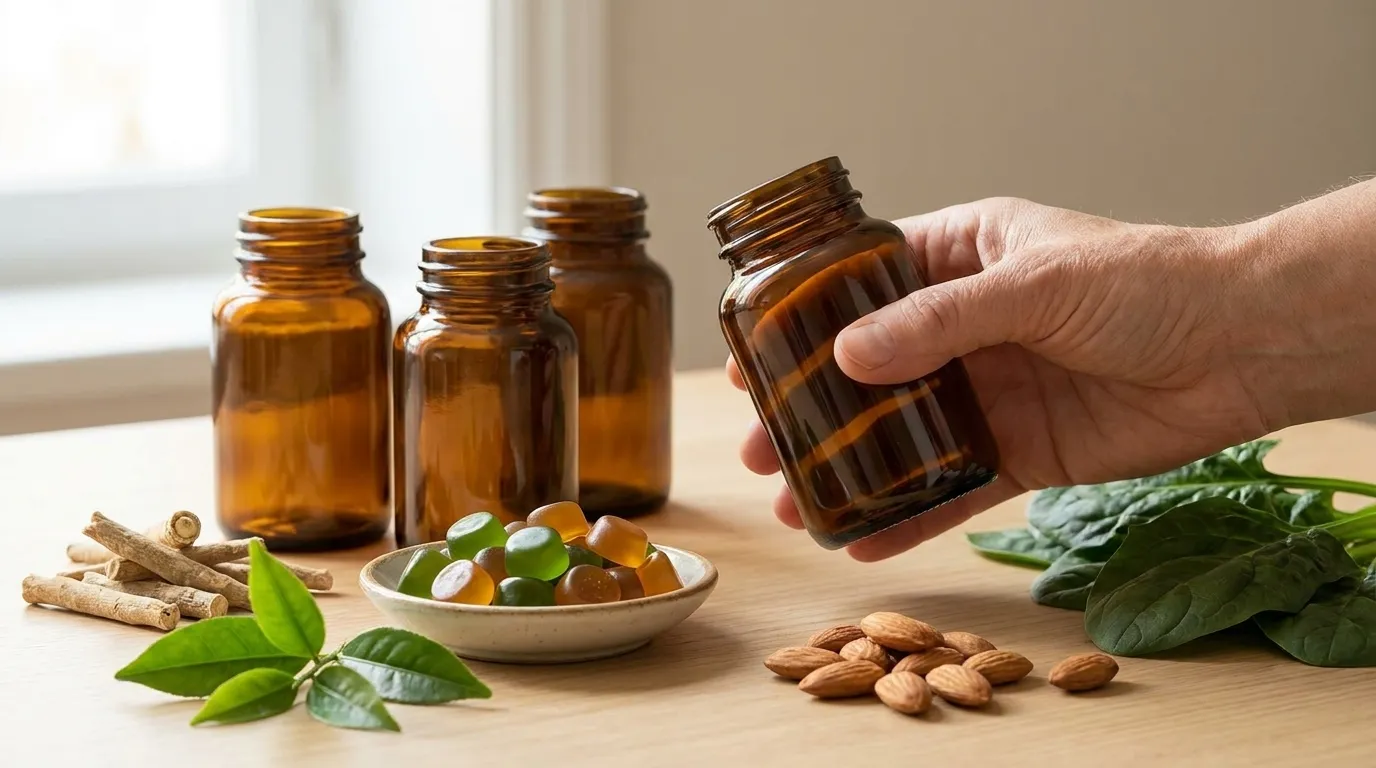
Stress Management Gummies Ingredients to Check
Finding the right stress management gummies can feel more confusing than it should. One label says “calm,” while another promises “mood support.” Some mix stress relief with sleep support, hormone balance, focus, or several other things at once. If the goal is to keep a wellness routine simple, it’s easy to start wondering which ingredients usually matter most.
That’s why it helps to ignore the front of the bottle for a minute and look more closely at what’s actually inside. The best stress management gummies aren’t just following a trend. They should have ingredients with a clear job, useful dose ranges, and a formula that fits the goal, whether that means staying calm during a workday, easing into an evening wind-down before bed, or getting extra support during a hectic time like travel or busy weeks.
This guide goes through the stress gummy ingredients worth checking first. It covers ashwagandha, L-theanine, magnesium, rhodiola, melatonin, and CBD. It also looks at sugar content, gummy quality, and timing, along with how to tell if a product is meant for daytime use or nighttime use. For a broader look at how these products work, that’s covered here: stress gummies side effects, benefits, and timing.
Why stress management gummies are getting so much attention
Stress support gummies are growing fast, and that points to something pretty clear: people want calm support that fits into everyday life. Industry estimates suggest the global stress relief gummies market could grow from USD 0.602 billion in 2025 to USD 0.64 billion in 2026, with longer-term growth still expected. Other estimates put the category even higher, which still shows strong demand, even if the exact numbers change from report to report, as they often do.
| Category | Market Size | Outlook |
|---|---|---|
| Stress relief gummies | USD 0.602B in 2025 | 6.5% CAGR estimate |
| Stress relief chewables | USD 1.15B in 2025 | 8.2% CAGR estimate |
| Cortisol gummies | USD 0.6B in 2025 | 9.3% CAGR estimate |
That growth is not very surprising. Gummies are easy to take, simple to add to a daily routine, and for many adults they feel more approachable than powders or large pills. It may seem like a small change, but it is a real one. They also fit current wellness habits well, especially for people already using keto supplements, apple cider vinegar gummies, adaptogens, or similar products, which are often already part of the same shelf or routine.
At the same time, fast growth creates more noise. Some formulas rely on one strong ingredient, while others use tiny amounts of several ingredients that look good on the label but may not do much in practice. That is why ingredient lists usually matter more than marketing claims, especially when comparing products side by side. A polished label, by itself, does not say much.
I think they can be helpful, and there is evidence that magnesium, L-theanine, omega-3, ashwagandha, and vitamin D can be worth considering in some cases.
The main point is simple: not every gummy is made the same way. A smart buyer looks at function and dose, while also checking whether the product fits their routine, like when they take supplements and what they are already using.
Ashwagandha in stress management gummies is often the first ingredient to check
If someone is exploring adaptogens, cortisol support, and hormone-aware wellness, ashwagandha is usually one of the first ingredients to check. It’s also one of the most talked-about ingredients in stress management gummies, likely because there’s real research behind it and it keeps appearing in wellness trends, for better or worse.
One clinically studied formula used 300 mg twice daily for 60 days and was linked to meaningful drops in stress and cortisol. That doesn’t mean every gummy needs to use that exact formula. Different products use different extract strengths, and serving sizes vary too. Still, dose usually matters. If a label lists only a very small amount of ashwagandha, it may not really fit the amounts used in the better-known research, and that’s worth noticing.
Ashwagandha can be especially relevant for adults who feel stressed and are also thinking about sleep, cravings, or weight management. Stress and cortisol often affect eating patterns, energy, and day-to-day consistency, which makes this more connected than it may seem at first. That still doesn’t make ashwagandha a weight loss supplement on its own. But in many cases, it can make sense as one part of a broader wellness routine.
When comparing options, one useful approach is to look at the extract form, the serving size, and whether the brand clearly explains the source. Those details are simple, but they usually say a lot. The research and daily use are covered here: Do Ashwagandha Gummies Actually Work? What Research Says About Stress, Sleep, and Everyday Use. Additionally, some shoppers also compare formulas in Ashwagandha Gummies for Stress: What to Know.
A good ashwagandha gummy should feel like part of a plan, not a magic fix. Sleep, regular meals, movement, and steady habits still matter alongside it, because that’s often the bigger picture. In this view, it usually works best when it supports routines already worth keeping.
L-theanine and magnesium in stress management gummies make sense for calm without feeling too heavy
A lot of people do not want a stress gummy that makes them sleepy in the middle of the day, which is completely fair. That is a big reason L-theanine and magnesium stand out. They often show up in formulas meant for relaxed alertness or an easier evening wind-down, especially after a packed day.
One clinical study in chronically stressed adults looked at a multi-ingredient formula with 150 mg magnesium, 125 mg green tea extract, and 50 mg L-theanine. It found stress relief by days 14 and 28. That is worth noticing because it suggests some formulas may work better with steady daily use instead of one random serving on a hard day, so a single try probably will not show the full story.
L-theanine, naturally found in green tea, is another useful ingredient.
L-theanine is popular because people often link it with calm focus. Magnesium is common because it is familiar, appears in many products, and is often tied to relaxation support. Together, they may make sense for someone who wants help feeling more steady, not something that leaves them knocked out or foggy.
A few label tips help here:
What to check on the bottle for stress management gummies
- The exact amount in each serving
- Whether green tea extract is included, since it often is, and whether it has caffeine
- You’ll usually want magnesium listed in a clear form
- Is the formula meant for daytime use or bedtime? That part often makes a real difference
If someone is choosing between calm-focus products and more classic stress formulas, a good next step is comparing the ingredients in Focus Gummies vs Stress Gummies: Which Ingredients Matter?. It’s useful stuff. Similarly, Stress Support Supplements: What to Look for in Gummies explains more about how these blends are built.
Rhodiola, melatonin, and CBD all have a place, but they are not all for the same person
This is where a lot of shoppers get confused, and honestly, that makes sense. A stress gummy might contain rhodiola, melatonin, CBD, or some mix of those ingredients. But they do very different things, so they are not really interchangeable.
Rhodiola is another adaptogen. It often shows up in multi-ingredient wellness blends and may appeal to people dealing with stress plus mental fatigue. It is less well known than ashwagandha, but it still belongs in conversations about modern stress-support formulas. Usually, it appears in blends aimed at people who want support during the day, not right before bed.
Melatonin works differently. It is mainly a sleep ingredient, not a core ingredient for daytime stress support. That distinction matters, especially now that stress and sleep products are overlapping more and more. Market research on sleep gummies suggests the category is growing fast, and melatonin makes up a big share of that space. So if someone buys stress gummies for everyday calm and the formula includes melatonin, the result may be sleepiness even when that was not the goal, which is obviously frustrating.
CBD is another ingredient that crosses categories. The nearby gummy market is growing quickly, and CBD also comes with regional and regulatory differences. In other words, it is not always simple. It may help some consumers, but shopping for it is usually less straightforward than shopping for botanicals like ashwagandha or minerals like magnesium. Local rules and product differences often need extra attention too.
One common mistake is choosing by mood words alone. Terms like “relax,” “unwind,” and “calm” do not explain whether a product is meant for 2 p.m. stress or 10 p.m. stress. That is often the part people miss. Matching the ingredient profile to the time of day usually makes the choice much clearer.
The label details that matter more than the front claim
Once the main ingredients are clear, the next step is to check the rest of the formula. That’s often where quality starts to separate a genuinely useful product from a sugary gummy dressed up in wellness language.
A good place to start is dose transparency. It sounds basic, but it can tell you a lot. The label should clearly show how much of each active ingredient is actually included, not just hint that it’s in there. Proprietary blends deserve extra caution, since they often hide the real amount of each ingredient.
Then there’s sugar and sweeteners. For health-conscious adults, especially people following lower-carb or keto-friendly habits, this can matter quite a bit. A stress gummy packed with sugar may not fit easily into that routine. Some people also prefer sweetener options that feel a bit easier on digestion.
It also helps to check the add-ons. Is the formula focused only on stress, or is it also trying to cover sleep, mood, focus, and more? More is not always better, and in this case that’s often where things start to feel less convincing. A blend can still be useful, but usually only when each ingredient has a clear purpose.
That’s why some shoppers look at plain-text brands like Use Gummies or visit Use Gummies to compare wellness gummy options built around specific goals instead of vague claims, which you’ll probably notice pretty often. Furthermore, guides like Mood Support Gummies: Ingredients That Actually Matter can help compare overlapping wellness categories.
How to choose the right stress gummy for your routine
The best way to choose stress gummies is usually to match the formula to real life, not the hype. Skip the buzz and start with your own pattern, focusing on what tends to happen in day-to-day life.
If you want daytime support
Ashwagandha, L-theanine, magnesium, or rhodiola are probably the main ones to look for. Be careful with melatonin, and green tea extract often has caffeine.
If you want evening wind-down
A night formula may include magnesium and L-theanine, and sometimes melatonin too, which is pretty common. That usually makes sense when stress shows up most at bedtime, while you’re trying to sleep.
If you care about keto or weight goals too
If keto or weight goals matter, check total sugar, the sweetener used, and the serving size. It’s really pretty simple. Convenience matters here too, along with consistency. I think a gummy you enjoy and take daily will likely work better than a capsule you keep forgetting.
If you are stacking supplements
Watch for overlap. If magnesium or adaptogens are already showing up somewhere else in the routine, it usually helps to read labels closely so everything stays simple and on purpose. Most people probably do not want doubles hiding across different products.
The bigger trend looks pretty clear: people want pleasant, targeted supplements that fit into busy days, which makes sense for real schedules. That is also why brands such as Use Gummies and wellness-focused options like a bioavailable gummy supplement brand keep getting attention. Often, the best choice comes down to the right ingredient mix, a clear label, and a purpose that actually fits the day. For broader comparisons, some people also read Trending Now: The Best Gummies for Stress Relief in 2026 – CBD vs. Ashwagandha.
The bottom line on ingredients worth checking
For stress gummies that seem honestly worth trying, the ingredient list is usually a better place to start than the marketing claims. Based on current evidence and what is happening across the category, ashwagandha is often the first ingredient to check. After that, look at L-theanine. Magnesium is also a good option for calm support, especially for people who want help without getting too sleepy, which is often the goal. That can make it a good fit for daytime use, like work hours or afternoons. Rhodiola may help in broader adaptogenic blends. Melatonin can be a better match for nighttime stress formulas, especially before bed. And CBD deserves extra caution, since rules and product quality can vary, and that is a real concern.
Before buying, a few simple questions usually make the process clearer. What is the dose? Is it meant for day or night? How much sugar does it contain? Are the ingredients listed clearly? Does the formula actually fit your goals for stress, sleep, hormones, or weight management? It is simple stuff, but it often saves time.
Once those questions are answered, shopping for stress management gummies gets much easier. You can skip more guesswork and choose something that fits your body, your schedule, and your wellness style, for example a daytime formula that supports calm without making an afternoon feel slow.