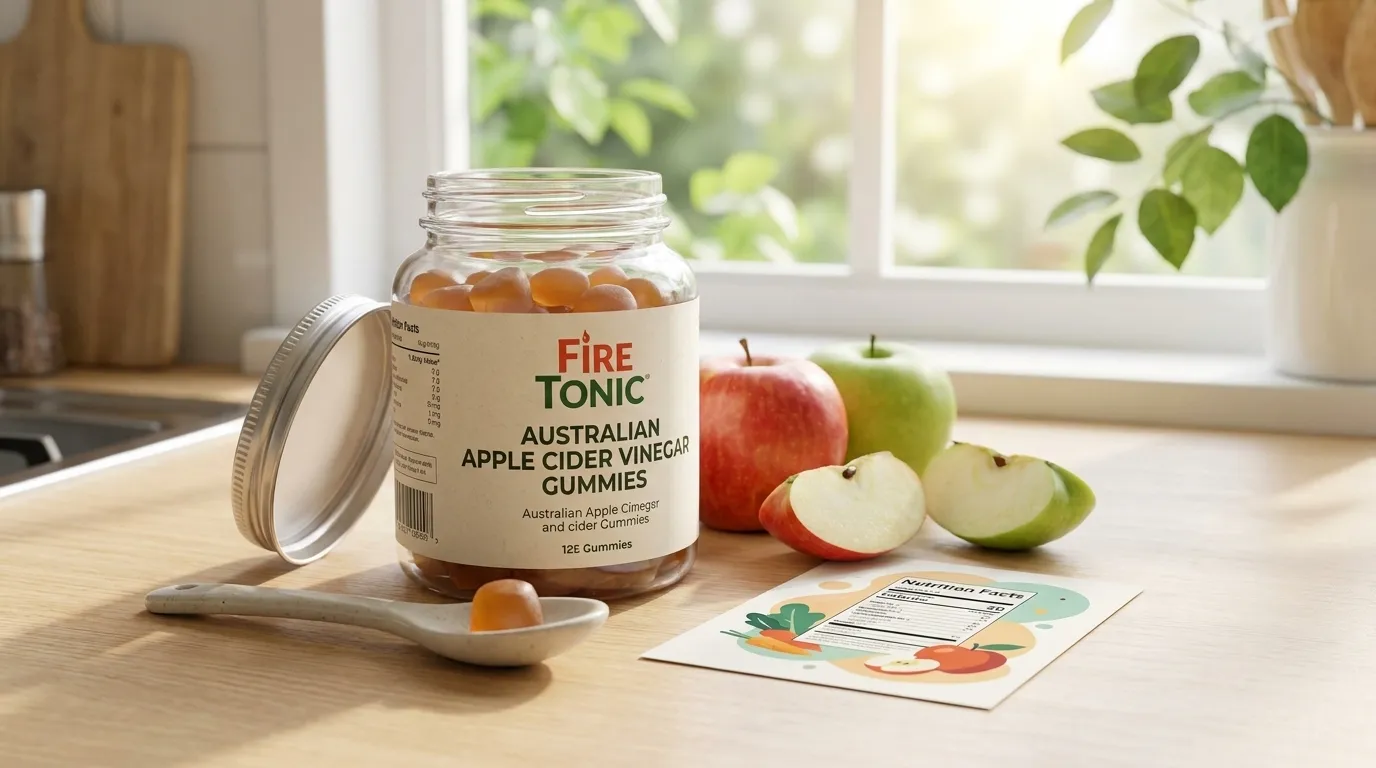
Vinegar Gummies: Why Quality Beats Trendy Claims
I think this needs to be said more clearly: most people shop for vinegar gummies the wrong way. They usually start with the front of the bottle, which makes sense. That is where words like “keto-friendly,” “detox,” “metabolism,” “adaptogenic,” or “with the mother” show up first. But the front label is often the least useful part of the product, probably because its job is to grab attention before it explains anything.
The view here is pretty simple. What’s actually in the gummy usually counts for more than whatever trend claim is on the label. If a gummy comes with weak dosing, extra sugar, vague ingredient amounts, or sloppy manufacturing controls, wellness wording won’t make up for it. Not even close. And for health-conscious adults trying to support weight goals, manage stress, or stick with a low-carb routine, that kind of mistake can matter a lot when they’re picking something to take every day, or at least most days.
This isn’t a small issue either. Supplements have become part of daily life for a lot of people. In the 2024 CRN consumer survey, 75% of U.S. adults said they use dietary supplements, and 91% of supplement users said supplements are essential to maintaining health. That kind of trust should make shoppers slow down and look more carefully. In a crowded gummy category, it makes more sense to start with the facts panel, where dosage, sugar, and ingredient amounts are easier to verify than the marketing story.
The label tells me more than vinegar gummies lifestyle branding ever will
The biggest mistake I see with vinegar gummies is treating branding like proof. It really is not. A nice-looking jar, earthy colors, and words like ‘natural’ or ‘hormone-friendly’ don’t say whether the formula is worth taking, even if the packaging looks great.
What helps more, usually, is the boring stuff: the Supplement Facts panel, the serving size, the exact amount in each serving, the sugars and added sugars, and the manufacturer details. In my view, those are the signs that make it easier to judge quality. They show what’s actually in the bottle and how much you’re getting, which is often the part that matters most.
FDA does not test dietary supplements before they are sold to consumers.
That one fact should change how people shop. According to Dr. Cara Welch at the FDA, the agency oversees a marketplace with more than 100,000 supplement products as of 2025. So it doesn’t make much sense to assume a trendy gummy was already checked for us, even though that is easy to do. In most cases, some of that checking still falls to the shopper.
| Market reality | Figure | Period |
|---|---|---|
| U.S. adults using supplements | 75% | 2024 |
| Supplement users calling them essential | 91% | 2024 |
| Supplement products overseen by FDA | 100,000+ | 2025 |
That’s really the main issue. Marketing claims are easy to print, but transparent labeling is often much harder to fake well. That’s usually where the difference starts to show. If a vinegar gummy doesn’t clearly say what is in it and how much you’re getting, I wouldn’t let trend language fill in those gaps.
Not all vinegar gummies are equal, especially if you care about sugar and keto fit
If you’re looking at keto or trying to manage weight, the ingredient quality really does matter here. Two vinegar gummies can make nearly the same claims on the front, then tell very different stories once you actually read the label, which a lot of people don’t. And if the goal is to stick with it, that’s usually the part that matters most.
NIH Dietary Supplement Label Database records show there’s real variation. One ACV gummy listing shows 2 gummies per serving, with 7 g total carbohydrate and 2 g total sugars. Another label record shows 4 g added sugars, equal to 8% Daily Value. That might not seem like much if someone is just browsing. But it can matter quite a bit when you’re trying to keep carbs low, avoid sugar spikes, or work a gummy into a careful daily routine, especially if every gram is being tracked.
| Example ACV gummy label | Serving size | Total carbs | Sugars / added sugars |
|---|---|---|---|
| NIH label example 1 | 2 gummies | 7 g | 2 g total sugars |
| NIH label example 2 | Noted on label | Not specified in summary | 4 g added sugars |
So there’s good reason to be skeptical when “keto-friendly” is printed on the front of a bottle. The phrase doesn’t say much unless the actual numbers back it up. In this view, the label should clearly show carbs, sugars, and serving size. When the sugar load works against the goal, the claim is often just decoration.
If it would help to take a wider look at how everyday use lines up with expectations, Apple Cider Gummies Daily Use: Benefits and Limits adds useful context. You can also compare Top ACV Gummies for Low-Sugar Daily Use if sugar content is one of the main concerns. But the point here is more specific: before asking whether vinegar gummies help, ask whether the formula actually fits specific metabolic goals. Most of the time, that’s probably the more useful question.
Finished-product quality matters more than ingredient name-dropping
Here’s another way the wellness market often gets this wrong: ingredient buzz is often treated like proof that a formula is good. It isn’t. Just listing ACV, ashwagandha, BHB, or adaptogens in a gummy doesn’t tell you much by itself, even if brands try to make it sound impressive.
More important is whether the finished gummy provides a meaningful amount, holds up over time, and gives the same dose from one piece to the next. Gummies aren’t simply capsules in a cuter form. They’re usually a lot trickier to make well. Potency and consistency can both be affected by heat, moisture, texture systems, sweeteners, and shelf life, which matters a lot for people who take them regularly.
One useful warning sign showed up in a 2026 industry report on vitamin C gummies sold on Amazon. It found that almost half of non-legacy brands tested failed to meet label claims. That report wasn’t specifically about vinegar gummies, and that’s worth being clear about. Even so, it may point to a broader issue in the category. Gummy supplements can look polished on the outside and still fall short on potency.
That matters even more when brands pack trendy claims into one jar. “Keto + detox + hormone balance + stress support + ACV” may sound current, but that doesn’t automatically mean much. From this view, a simpler gummy with a clear dose, low sugar, and stronger manufacturing discipline is usually more convincing than a trendy formula trying to do everything and ending up doing none of it especially well.
So when comparing low-carb positioning, Are Keto-Friendly Gummies Really Keto? is worth reading next. It shows why that claim alone shouldn’t be what closes the sale. For a broader comparison, Best Keto ACV Gummies for Daily Use: Top Brands Compared by Dosage and Ingredients is also useful for seeing how formulas differ.
Yes, convenience matters, but only after quality is proven
There’s a real counterargument here, and it deserves a fair look. Gummies are popular for clear reasons: they are easy to use, they usually taste better than liquid vinegar, and they travel well, which is truly convenient. A lot of people are also simply more likely to keep taking a gummy than a pill or a sharp-tasting liquid, and that probably matters more than some brands want to admit.
That point makes sense. Adherence is probably one of the strongest arguments for gummies. The broader gummy market was estimated at $23 billion in 2024 and is projected to grow at a 10.4% CAGR from 2025 to 2034, reaching $54 billion by 2034. Growth at that level usually says something pretty clear: consumers do care about convenience, and it’s easy to see why.
Still, convenience isn’t a free pass. A daily routine only helps if the product itself is worth using. If vinegar gummies are underdosed, loaded with sugar, or unclear about what’s actually inside, then consistency may just leave someone consistently disappointed. In most cases, that turns into a habit without much real value.
So the position here is simple and clear: convenience matters, but it comes second. First, the product has to show it’s actually good. Then it’s worth asking whether the format is pleasant enough to stick with every day.
The smartest way to shop for vinegar gummies is to ignore the trend stack and check the formula
When I look at vinegar gummies now, I use a simple filter, and it probably helps. It gets past the hype and keeps the focus on the formula. That usually makes shopping feel a lot clearer for you too.
1. Check the active amount
Can you tell how much ACV or similar actives are in each serving, since that’s usually the main part? If not, that’s probably a problem. Vague blends make it much harder to compare products.
2. Check sugars and serving size
Don’t just look at “per gummy,” since that’s easy to miss. You’ll want to check the full serving too. A bottle can seem low in sugar at first, then you notice one serving is two gummies, or sometimes more, which happens a lot.
3. Look at the rest of the formula
If the product also claims stress support or hormonal balance, are those added ingredients actually quantified, with a real amount listed? Honestly, a popular herb with no clear amount usually isn’t very convincing. Not really.
4. Look for serious manufacturing
Clear company info and clean labels are a good sign, and the brand likely takes quality control seriously. That often means GMP-focused practices and, if possible, third-party testing too, which usually helps.
5. Match the gummy to one main goal
People often go for the biggest promise instead of the option that actually suits them, and it happens all the time. If what you’re really after is appetite support, compare products with that use in mind. But if stress eating is the issue, you’ll probably want different ingredients, sugar content, or dose instead. Short version: Appetite Suppressant Gummies vs ACV Gummies can help figure that out. People comparing broader options may also want to read Best Gummies for Weight Loss: Comparing Keto, ACV, and Other Options.
This is also where brands like Use Gummies fit into the conversation, and that’s genuinely useful. Better wellness brands usually aren’t winning by shouting the loudest. They’re doing better because more shoppers ask tougher questions about sugar, dose, ingredient clarity, and how a product fits into a daily routine. In most cases, that’s what helps people make better choices.
What I believe happens next in the vinegar gummies market
The wellness space seems to be entering a more skeptical phase, and that’s probably a good thing. The apple cider vinegar market is expected to grow from USD 1.36 billion in 2025 to USD 2.27 billion by 2031. That kind of growth usually brings more new ideas. It also pulls in filler products trying to ride demand, and those are often pretty easy to spot.
My prediction is that flashy claims will keep multiplying, while consumer trust will likely shift toward brands that make side-by-side comparisons easier. Clear labels will matter more. Low-sugar formulas will matter more. Finished-product testing will matter more too. So shoppers who used to buy mostly based on trend language will probably start choosing based on evidence they can read and check for themselves.
That change matters if you’re shopping. If you want vinegar gummies that support weight goals, stress-aware routines, or keto habits, it makes more sense to ask which one gives you the clearest facts, not which bottle sounds the most advanced. That kind of wording usually isn’t the best sign anyway. In most cases, the useful things to look at are the label, the sugar content, and whether the finished product was actually tested.
With gummies, quality isn’t just a nice extra. It’s usually the deciding factor when choosing something to take every day. Trendy claims might grab attention first, but in my view, a transparent, well-made formula is the one that deserves a place in a daily routine.
